Tuesday, January 17, 2012

Tram Tuesday - Lynchburg, Virginia

Lynchburg, Virginia has a rich and colorful history. Back in 1757, it was just a ferry crossing from Lynch's Landing across the James river. The ferry service was provided by 17-year-old John Lynch, who a few decades later petitioned the Virginia General Assembly for a town charter. Years later, the city was spared from any severe damage during the Civil War because General Jubal Early ran empty train cars through the area to make it look as if reinforcements were coming into Lynchburg.

In 1880, fifteen years after the end of the Civil War, the first horse-drawn streetcars started operation in Lynchburg. Streetcars didn't last as long in Lynchburg as they did in many other American cities though; they were gone by 1941.

The message on the back of the card appears to have been written in 1911.

 
The message reads:
Arrived here about 7;30 and hope to leave tomorrow. Feel well and hope you are to

Here are a couple of before-and-after views of Lynchburg, courtesy of Kipp Teague, Lynchburg resident and generous host of a Retroweb, which features many old and new views of Lynchburg.

Source

Source

Monday, January 16, 2012

The French Influence

These are American trade cards from the 1880s with French writing on them. But who reads French anyway? Best pretend not to,  or you may see yourself featured in some unflattering television spots.


 Here's what the back of the cards looks like.
 I'm not sure what Arnaud sold, but I would love to see what the shop looked like.

Friday, January 13, 2012

Hats and the People who Wear Them

I realized, when I was looking for photos of people wearing hats, that people in my family just didn't wear hats very much, at least not very exciting ones. My husband's family has a few photo postcards of people with hats; the only problem is that we're not sure who they are, maybe cousins or in-laws. However, it's probably safe to assume that they were recent immigrants to upstate New York from Moravia or Bohemia at the time the photos were taken. Her hat looks classic 1920s.


Never mind his hat, I'd love to know more about the pipe.

I have plenty of cards that show big beautiful hats, including this one, with the generous addition of glitter.

It also has an amusing message on the back.

 The message to Lloyd Robbins of Frankfort, New York was sent in November, 1907:

Would like to exchange postal if this card is ans. I will send better one
Lillian Rhodes
31 Maple Street
Gloversville

I didn't find anything definite about Lillian Rhodes, but Lloyd Robbins, born in 1897, seems to have been inducted into the military in 1918.

More exciting hats can be found at Sepia Saturday.

Thursday, January 12, 2012

Good For What Ails You #5

I was going to post something celebrating this blog's 100,000th visitor yesterday, but I'm a little under the weather and just didn't have the energy. Instead, I am on the search through these trade cards from the 1880s for a remedy that will make me feel better.


I don't really have a cough, but the cough drops might make me feel better anyway, especially if they're the old fashioned kind.
The backs of these cards promise me that they are cheap, harmless, pleasant, and effective.

There are some other brands I could try too.


The Red Cross Cough Syrup says it's good for whooping cough too. Nichols Bark and Iron seems to cover everything, including malaria, general debility, nervous prostration, and hypochondria. It must have a very high alcohol content! It also has Calisaya bark and iron in it. Where's the laudanum?


I don't know.  I'm feeling a little tired, but maybe I need to mix up my own elixir. I turn to my best resource book: Dr Chase's Recipes or Information for Everybody, published in 1867. The book contains sections for farriers, painters, and leather workers, in addition to the medical advice. I sometimes wonder if they get mixed up, since linseed oil does appear in some of the medical recipes. Maybe it just slipped over from the furniture refinishing department.

In any case, here are a few recipes for your amusement. Good luck finding the ingredients. I guess people just used to go to their grocer or pharmacist for these things? Try going to your pharmacist and asking for an ounce of Turkey opium.


Paregoric is also prepared with opium, just in case you thought this recipe was opium free.


  I know that a number of these recipes call for laudanum. Here's a recipe for that.


It seems that my pharmacist is out of Wahoo, spikenard root, and tamarack bark, so I think I'll just go to bed.

Wednesday, January 11, 2012

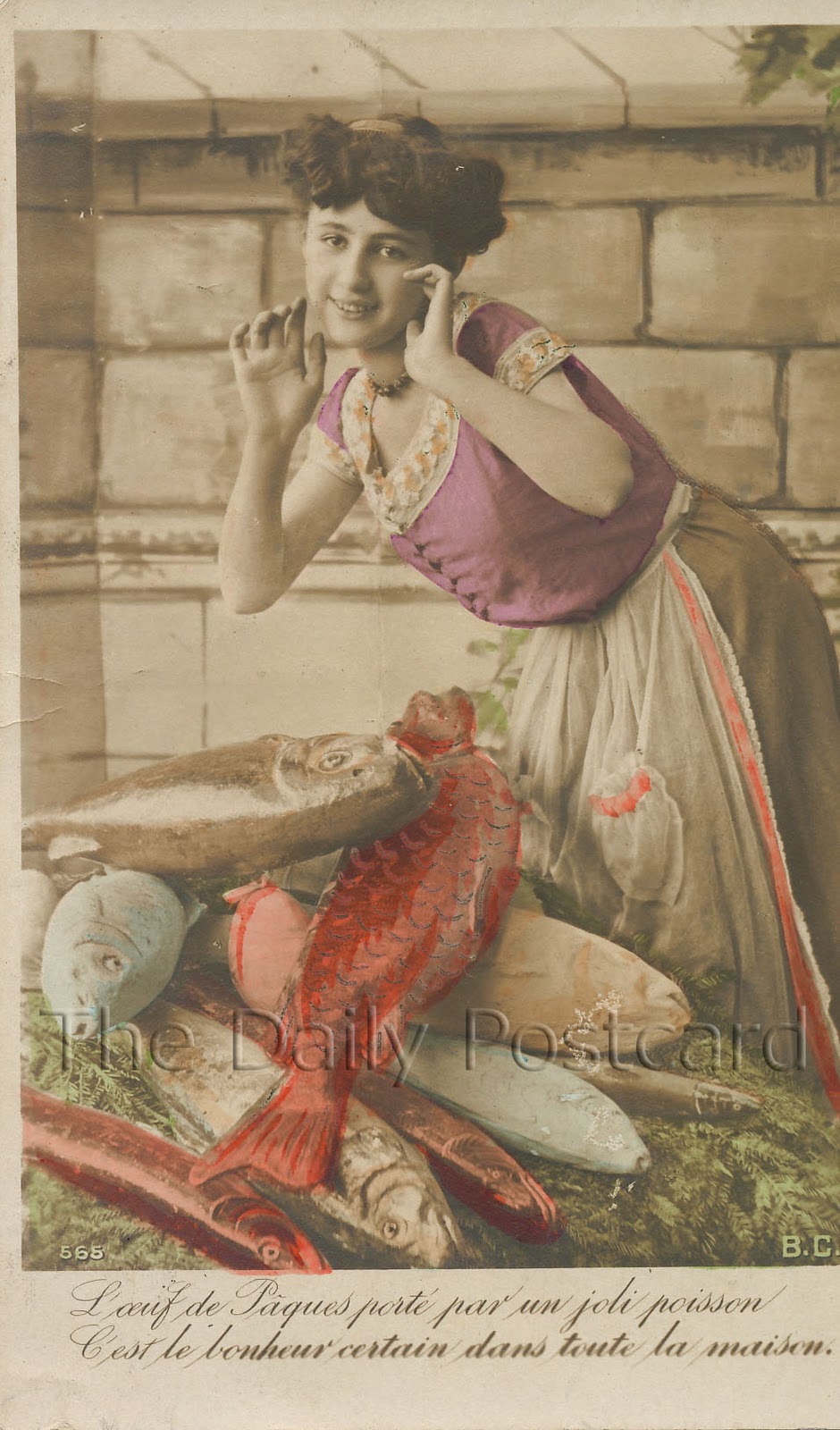
Beware the Escolar, My Son

This is a special warning post to protect my dear readers from harm by fish. I write this because we have increasingly encountered this particular fish on restaurant menus, a fish that should not be there. Eat it at your peril. We did, and now we know better.


The fish is called Escolar or Snake Mackerel, but more often is listed on menus as Super-White Tuna, Walu, Butterfish, and even as Sea Bass and Black Cod and a number of other fish that it isn't.  This is a misrepresentation. It's hard to say if this is the fault of the fish wholesaler or the restaurant, but it's dishonest. The best thing to do is to ask the waiter if it's the same thing as Escolar and hope that you get the correct answer...or order something else. If you order the fish, it will be very rich and delicious, and you would be unlikely to attribute the alarming after effects to this tasty fish. That said, there have been lawsuits against restaurants. It is currently illegal to sell the fish in Japan and Italy. Some countries allow it to be sold, but only with a warning. It was also prohibited in the United States until the 1990s, but now it's legal to sell and becoming more common.

Now, you're probably wondering what this fish does. I will not describe it here, but will guide you to a few informative links including Wikipedia and the Medellitin Food Blog . I would also mention that it is probably (?) safe to eat the fish in a tiny portion such as on a sushi roll. Many sources claim that if you keep the serving under six ounces you should be fine. I can tell you from experience, (we split an 8-oz portion) that that's not true. There are also claims that only 1 in 3 people have problems with it. I don't buy that either.


  Here is the back of the last card, associating good health with the fish. Believe it if you will.

Tuesday, January 10, 2012

Tram Tuesday - Berlin, Germany

As you can see, this gentleman is balancing the tram on his head. And yet he looks so nonchalant.


It's a shame that someone removed the stamp. It wasn't likely worth much anyway, and the postcard loses something important in the process, not just the stamp, but the cancellation date. We can make a pretty accurate guess though based on the cancellation message, which urges people to join the Reichluftschutzbund, the State Air Protection Corps., which was formed in 1933.

The Berlin tram system was (and is) extensive. It was one of the earliest tram systems, with the first public line opening in 1847. Most of the lines that ended up on the western side of the city after World War II were replaced with bus routes, but the East Berlin system remained largely intact.


The message on the back of the card reads:

I'm having a very nice time in Berlin and wish it could last forever. With best regards Edith Flemming

Edith could not have foreseen the horrors of World War II, just around the corner. She could not have known that this part of Berlin would become East Berlin and that the remains of the palace would be demolished in 1951. She would not have wanted to stay forever though, that is certain.

Monday, January 9, 2012

Juarez, Mexico

Was Juarez a dangerous city back in 1911? Probably not like it is today. The street scene looks very peaceful with the horse-drawn carriages and the shaded booths.


The message on the the card to Elnor (Eleanor?) Moss of Minneapolis reads:

Dear Elnor
As I have just come in from the 30 Mill station and had a few nickels in saved from the rations and found a few cards.
Yours truly
W.J.L.

I'm not sure what 30 Mill station might have been. Any ideas?

Friday, January 6, 2012

Milo and Maude

Maude sent this card to Milo, with an information-rich message about rubbers, cuffs, and watches. I like messages like this that transcend the usual "I am well. Hope you are well too. Please write soon." Thank you, Maude!

Here's the front of the card - very bucolic.

Here's the back of the card, which is really more interesting.


Maude Pope sent this card to Milo L. Mack in 1909.  I love messages like this, and I think I would have liked Maude if I had met her:

Dear friend Milo - I will send you a card did you catch the car last night you forgot your rubbers- did you tell your mother I wouldn't let you come home. Well Milo - I took your cuff buttons down, and they said they couldn't exchange them now but they would have changed them if I had brought them in before Xmas: so I had them marked. I was awful sorry I couldn't change them and get a watch fob, but I couldn't so you can save them to look at anyway. I had a letter from Charlie and he wants me to come up but I am not going so will say Good Night from your true friend Maude
I have just wound my watch

So, who were Maude and Milo? I thought of posting this card about a year ago and couldn't find anything, so I left it alone. I read it again this week and thought I'd check one more time. If it hadn't been for an obituary, I would have been in the same place as last year. The obituary I found was for Elizabeth J. Seeloff Eaton, born May 5, 1918. Sadly, she died just last week, on December 28, 2011. She was the daughter of Milo Lee Mack and Maude Pope Mack. Although I was sad to hear about Elizabeth's death, I was somehow elated to hear that Maude and Milo married and had children. True friend, indeed! The card was sent in 1909, so sometime between then and about 1914 they got married. They had a son named Milo Jr. in 1915 and the daughter, Elizabeth, in 1918.

The 1920 Census shows John employed as a shoe packer in a shoe factory. That also brings a smile to my face. The address on the card was Lestershire, New York, a village that no longer exists, since it was renamed Johnson City in 1916. Johnson City (near Binghamton, New York) was the home of the Endicott Johnson Shoe Factory, reported by many to be a great place to work. Not only that, but Milo worked there at the same time as my mother-in-law's parents. They may well have known each other.
Check out this earlier post on the Endicott Johnson Shoe Factory.

Thursday, January 5, 2012

Vasagatan - Stockholm Sweden

Here's a card showing Vasa street or Vasagatan in Stockholm, Sweden around 1900. It is now a very busy street with lots of traffic.
Eventually, Vasagatan becomes Vasabron (Vasa Bridge), when it crosses the Norrström, as you can see in this more recent postcard. If you look closely, you can see a tram on the bridge. I love this card because of the mysterious barrel floating in the water. Parliament is nearby...is there a politician inside?


Here are the backs of the cards in the same order.


Wednesday, January 4, 2012

The Lobster, Oyster and Chop House - New York City

At the time this postcard was sent, you could get a lobster dinner at the Lobster, Oyster and Chop House for under $3. In fact, for $2.50 you could get the Special Continental Supper, which included clam chowder, deviled crab, a whole Maine lobster, french fries, cole slaw, and coffee. There was an amazing variety though, and you could instead order smelts ($1.50), bluefish (also $1.50), Finnan Haddie ($1.35), shad roe ($2.25), mackerel, scallops, swordfish etc. And if you weren't in the mood for fish, you could order prime rib, a roasted chicken, or veal cutlets among many other things.

I came upon a website that gives a very nice description and a short history of the restaurant. Here's what the website, created by Bill Bence, has to say about it:


The Lobster Palaces

After a movie at one of the downtown palaces Mimi Sheraton's affluent Brooklyn family sometimes went to The Lobster, Oyster and Chophouse, better known simply as The Lobster by its patrons, Sheraton's college boyfriend also took her there on dates in the mid-40s. It was located on West 45th Street near Times Square and had opened in 1919. Lobster houses had been a Times Square fixture for decades. Around the turn of the century they were posh hangouts, along with oyster bars, for the sporting crowd. The Lobster and its 1946 counterparts were more mid-market. Sheraton always ordered the lobster but she writes that her mother would order “strange” things like gray sole, broiled bluefish, steamed codfish or finnan haddie with an egg or cream sauce

In his 1930s guidebook Dining in New York, Rian James described The Lobster as “a low-ceilinged, rambling restaurant with the grace and courtliness of a one-arm cafeteria; with rushing, ribald waiters, who dash up and down between the long aisles of tables with squirming lobsters in their hands, who take your order in a restless, 'must be getting away' fashion, making the distance between the oyster bar, up front, and the kitchen in the rear, in pretty nearly nothing flat.” The walls were decorated with mounted lobsters and fish and cartoons from Harry Hershfield and Fay King. According to Rian, it also had the best seafood in the city at a reasonable prices, which drew mobs of suburban and outer borough theatergoers in such numbers that people waited on line on the sidewalk to get in. The many other lobster houses in the immediate vicinity based their business on the overflow.

The Lobster was among a number of establishments that were fined in February 1946 for charging customers more than the legal ceiling prices set by the OPA. The Lobster paid a much higher fine than the other restaurants cited. That summer it also was cited for unsanitary conditions. It stayed in business until 1972 when increased costs, declining patronage and a change in the neighborhood made it no longer profitable. It was a favorite lunch spot for the staff of The New Yorker and Richard Harris wrote a "Reporter At Large" piece in the December 30 issue about its closing. To him it was a "comfortably unattractive," bustling place with efficient waiters and the air of convivial private club where you could get simply prepared, fresh seafood at reasonable prices. The owners, who were really pissed at the unions as well as the city bureaucracy, told Harris that the unions used to block the employment of African-Americans from any but menial positions. They defied the unions to promote a Black employee to the oyster bar.

The back of the postcard seems a little odd, since it has a return address stamp from New York, but was postmarked in Astoria, Oregon...and there's no message.  It's not quite as strange though if you know that the recipient, Edwin Payne, was a postcard, stamp, and cover collector and a postal historian. Here's a plaque in his honor from The Salem Stamp Society.

Tuesday, January 3, 2012

Tram Tuesday - Havana, Cuba

I could tell you all about the trams of Havana, Cuba and how they started out as horse-drawn transportation for freight only, and how electrification of the system came fairly late, in large part because of the war with Spain.  However, if you want to know more about streetcars in Havana or anywhere else in Cuba, you should really take a look at Allen Morrison's website, The Tramways of Havana. He documents the entire history of the system, with lots of great photos and postcards.

Here's Prado Avenue with a tram and horse-drawn carriages in about 1905.

The message on the front of the card to Clara L. Gray of Minneapolis says:

Jan 13 '06
This is Prado. I tried to describe in the letter I'm sending at same time. The ocean in the distance also Morro castle. G.D.G


Here's a card showing Morro Castle.

Monday, January 2, 2012

5th Avenue and 49th Street, New York City

Here's the view circa 1910, when St. Patrick's Cathedral was the tallest building and it was surrounded by residential buildings. Plans for the cathedral started taking shape in the 1850s, but many considered the idea preposterous, because the site was so remote. The cathedral's doors opened in 1878. After that, the city grew around the cathedral.

And here's what it looks like today. St. Patrick's Cathedral is still there, it's just dwarfed by skyscrapers.


View Larger Map

Here's the back of the card--sadly with no message.

Sunday, January 1, 2012

Czech New Year

The lovely Czech family on the front of this card sends you hearty New Year's greetings. I also wish you a very happy New year, but I don't read or speak Czech, so I'm afraid I can't offer a translation of the message on the back.  Any input from Czech speakers out there would be greatly appreciated.


LinkWithin

Related Posts with Thumbnails